We are almost at the finish line of the COVID-19 global pandemic. Covid-19 has afflicted tens of millions of people worldwide. Hopefully, this will be my last post on COVID-19 for awhile (well at least for the nasty aspects of the virus) with the vaccination almost at our door step and just a jab away.

The interesting thing about this pandemic is that the coronavirus didn’t discriminate against developed vs under developed countries. It had a dire and devastating almost tantamount effect across the globe, which meant mankind had to come together to fight it like never before. This also meant that all the developed countries had to put in all their efforts and resources into finding a cure or a vaccine. The end result is that we have 3 or more vaccines against the coronavirus with almost similar efficacy.
There are 3 vaccines showing the most promise. 1) Pfizer-BioNTech COVID-19 vaccine 2) Moderna vaccine and 3) Oxford-Astrazeneca vaccine.
Let’s discuss how these vaccines work and what the future holds. The Pfizer-BioNTech and Moderna vaccines are mRNA vaccines designed on the same principle.
How do mRNA vaccines work?
Vaccines train the immune system to recognize the disease-causing part of a virus. Vaccines traditionally contain either weakened or inactivated viruses or only the synthesized signature proteins of the virus.
mRNA vaccine consists of the genetic material called the messenger RNA (mRNA) which encodes the viral protein. When these genetic instructions or codes in the form of mRNA are injected into the upper arm, the muscle cells in the body make the viral protein.
The coronavirus vaccine is a synthetic mRNA vaccine which encodes the critical fragment of the viral protein (the spike protein). When injected, this gives the human immune system a preview if you will, of what the real virus looks like without actually causing disease by itself. The human immune system is then activated to design powerful antibodies that can neutralize or nullify the real virus if the individual is infected with the actual coronavirus.
Advantages of mRNA vaccines
mRNA vaccines are not full length genetic material of the virus. It has only the elements needed to make the main virus protein. Secondly, mRNA does not interact with the human genome. Thus, potentially detrimental integration into out own DNA or genetic material is excluded. Finally, the mRNA metabolically decays within a few days, making mRNA a merely transient carrier of information. The immune system takes a snapshot of the viral protein it encounters and remembers it for future infections.
Pfizer-BioNTech COVID-19 Vaccine
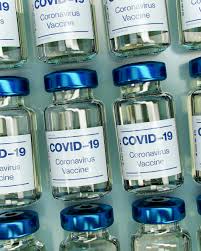
The US pharmaceutical company Pfizer and its German partner BioNTech came up with vaccine candidate for coronavirus called BNT162b2. The Pfizer-BioNTech vaccine is a lipid nanoparticle–formulated, modified mRNA which codes the SARS-CoV-2 full-length spike protein. BioNTech (Germany) is the developer of the vaccine, while Pfizer(US) provides logistics, finances and oversees the clinical trials. Pfizer estimates that about 1.3 billion doses of the vaccine will be rolled out by mid-2021.
The vaccination requires two doses given three weeks apart. It is the first vaccine to be rolled out for coronavirus after clinical trials proved that it has a potential efficacy of 95% in preventing infection within seven days of a second dose. The most commonly reported side effects of the vaccine, which typically lasted several days, were pain at the injection site, tiredness, headache, muscle pain, chills, joint pain, and fever.
The United Kingdom was the first country to authorize the use of the Pfizer-BioNTech vaccine on an emergency basis. Other countries like Bahrain, Canada, Saudi Arabia, Mexico, the United States, Singapore, and Kuwait followed by mid-December.
Emergency use authorization
The U.S. Food and Drug Administration (FDA) has issued an emergency use authorization (EUA) for the Pfizer-BioNTech COVID-19 vaccine and is in the process of granting EUA to the Moderna vaccine as well. EUA is different from a full FDA approval (licensure), which will be effective until circumstances that justify the authorization of the emergency use of the drugs and vaccines for prevention and treatment of COVID-19 change. The EUA can be revised or revoked if it is determined it no longer meets the statutory criteria for issuance. With this authorization, the companies can begin vaccine distribution in the U.S.
Moderna vaccine
Moderna is an American biotechnology company. Moderna’s coronavirus vaccine mRNA-1273 is based on the coranavirus spike protein formulated in lipid nanoparticles. The vaccine was developed in collaboration with the US National Institute of Allergy and Infectious Diseases.
The Moderna vaccine works in the same way as the Pfizer vaccine. Once taken up by cells, the RNA is used to produce the protein, which then triggers an immune response. The RNA is then degraded by the cell within a day of the injection.
The vaccination is administered as two doses one month apart. The vaccine is deemed to be 94.1% effective.
The Pfizer and Moderna vaccines differ in the composition of the lipid nanoparticle that covers the mRNA. Further, Moderna’s formulation allows the vaccine to be stored at−20 °C freezer for 6 months, and in a refrigerator (at about 4 °C) for 30 days. Whereas, Pfizer’s vaccine must be kept at −70 °C, much colder than a normal freezer. This might give a slight edge to the Moderna vaccine over the Pfizer vaccine, particularly in rural areas and in countries with limited health-care infrastructure.
Oxford/AstraZeneca COVID vaccine
The Oxford-AstraZeneca COVID-19 vaccine, ChAdOx1 nCoV-19, was created by the University of Oxford and its British-Swedish pharmaceutical company partner, AstraZeneca.
The Pfizer-BioNTech and Moderna vaccines are based on messenger RNA (mRNA) technology. Oxford-AstraZeneca’s is an adenovirus-vectored vaccine taken from a common cold that normally infects chimpanzees. It is designed using a virus that causes the common cold in chimpanzees. The chimp virus is modified, so it cannot multiply and cause disease in the human body. It is then loaded up with the coronavirus spike protein. When the Oxford vaccine is injected, the chimp virus delivers the genetic material needed to make the coronavirus spike in the human cells. These are detected by the immune system which produces antibodies and other responses that can attack the real coronavirus should the person become infected in the future.
The Oxford vaccine is significantly cheaper than the other two major shots being produced by Pfizer-BioNTech and Moderna. Unlike the other two vaccines, the Oxford vaccine can be stored at a regular fridge temperature for up to 6 months. Pfizer-BioNTech’s product costs around $20/dose, Moderna’s is about $33/dose, and the Oxford-AstraZeneca vaccine is available at a much cheaper price of around $4/dose.
AstraZeneca has drawn up agreements to make 2 billion doses of its vaccine by summer 2021. Through Europe’s inclusive vaccines alliance, up to 400 million doses of the Oxford vaccine will be supplied to European nations, starting in 2020. The UK already has 4 million doses of Oxford vaccine with 96 million to come.
There are many questions that remain to be answered. How soon will the COVID-19 vaccine be made available to over 6 billion people around the world? Do these vaccines prevent asymptomatic infections as well as illness caused by the virus? How long do these vaccines confer protection against the virus? Do we need to take it annually like the flu virus? Time will only answer these questions.
In summary, 2020 has been an incredible year in terms of scientific achievement in the face of a global pandemic. In less than a year, despite the numerous restrictions scientists have characterised a novel disease, sequenced an unknown virus’s genome (genetic sequence), developed diagnostics, and vaccine is just a jab away. Hope is just around the corner but not without hoops to jump through! We are almost at the finish line.
 cuppascience
